It was another early morning, and I was woken up by the sun coming through my window as I had forgotten to close the blinds the night before. I had been looking forward to visiting Coober Pedy as I had heard about it when we lived in Australia, but it was too far for us to make the trip out. It’s certainly one of the more unique places in Australia.
The train stopped in Manguri, a railway siding about 45 minutes from the town. Our trip into Coober Pedy involved a long unsealed road, although that didn’t seem to bother my seatmate who passed out shortly after getting on and only woke up when it was time to leave the bus.
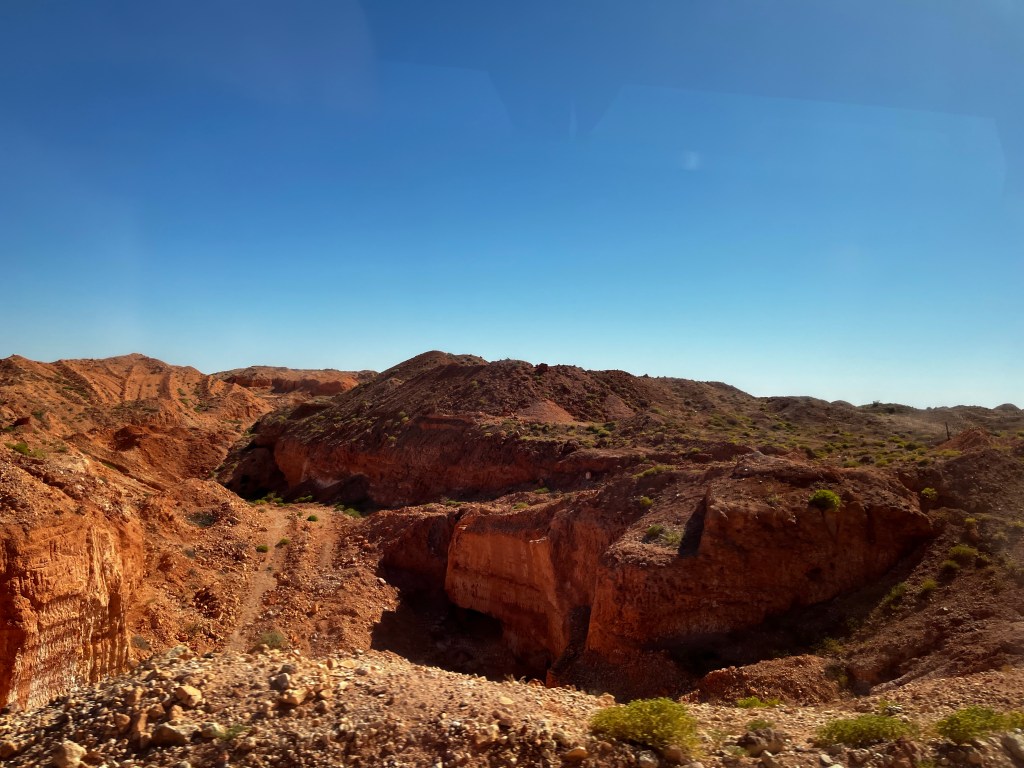
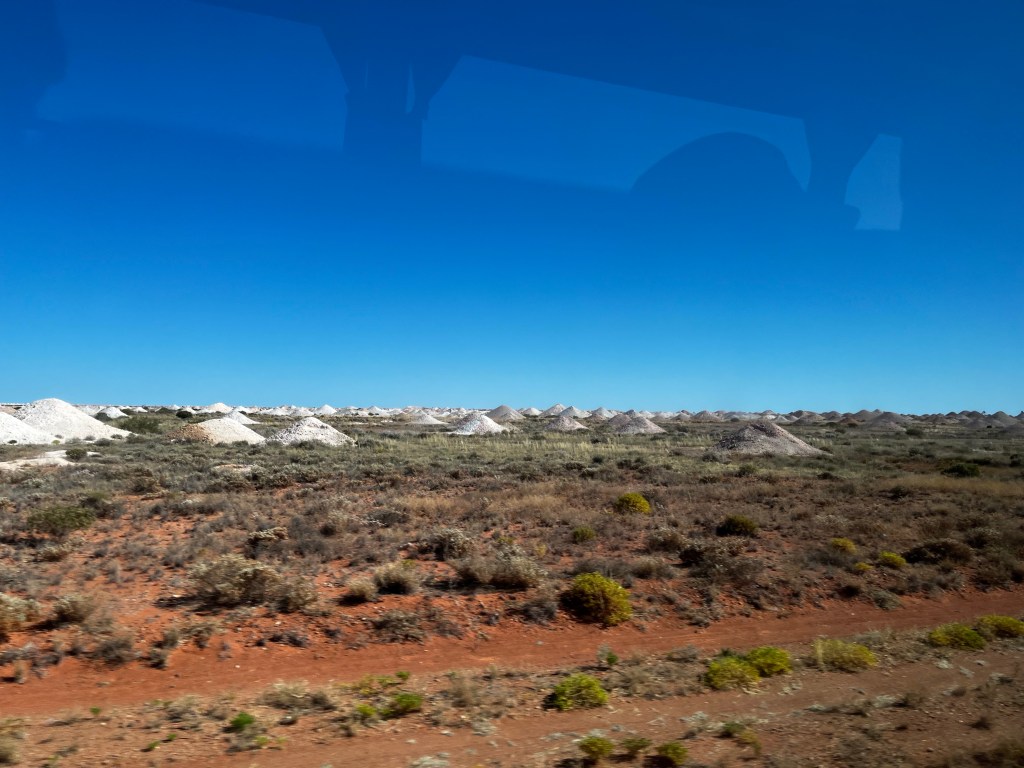
Our first sights of Coober Pedy weren’t quite what I expected. The driver mentioned that most people’s yards look like a junkyard because it’s so expensive to have things like old cars moved down to Adelaide. Due to the arid climate, there’s little opportunity for rusting to occur, so the junk metal can remain in good condition for decades and be salvaged as necessary.
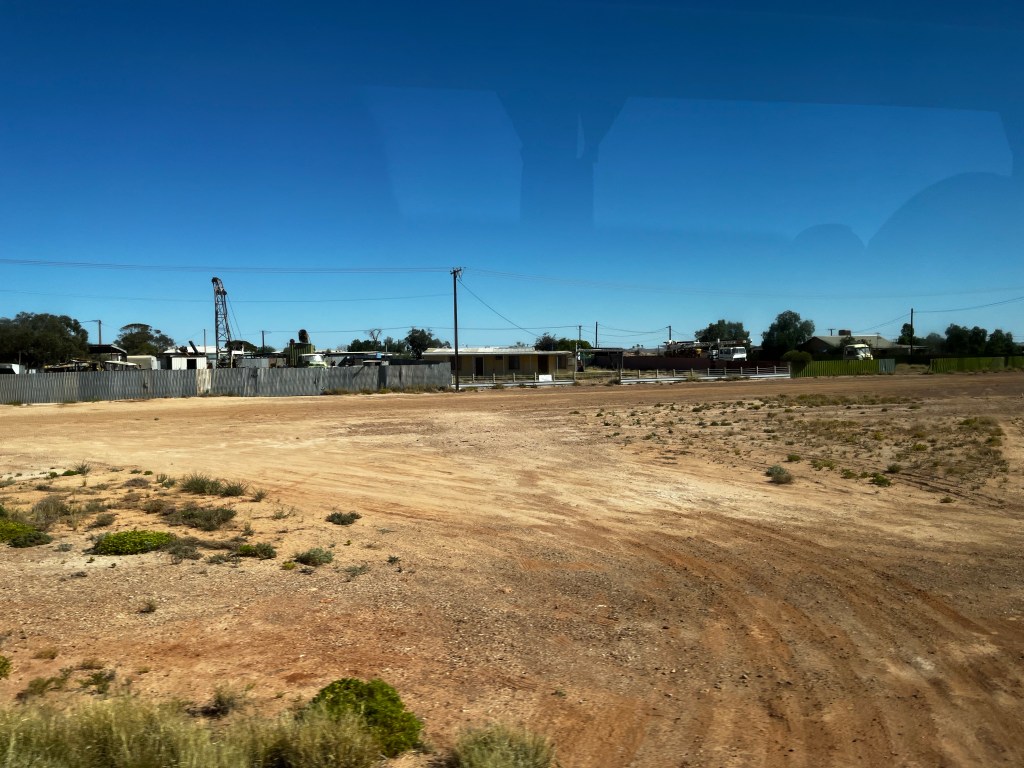
Most people live in dugouts due to the extreme weather conditions. During the summer, it gets brutally hot, and winters are cold (by Australian standards that is). Living underground regulates the temperature so that it’s always a comfortable 24 degrees regardless of what it’s like up above. Typically the kitchen and bathroom will be above ground due to the difficulty of plumbing underground, with the rest of the living spaces in dugouts below ground.
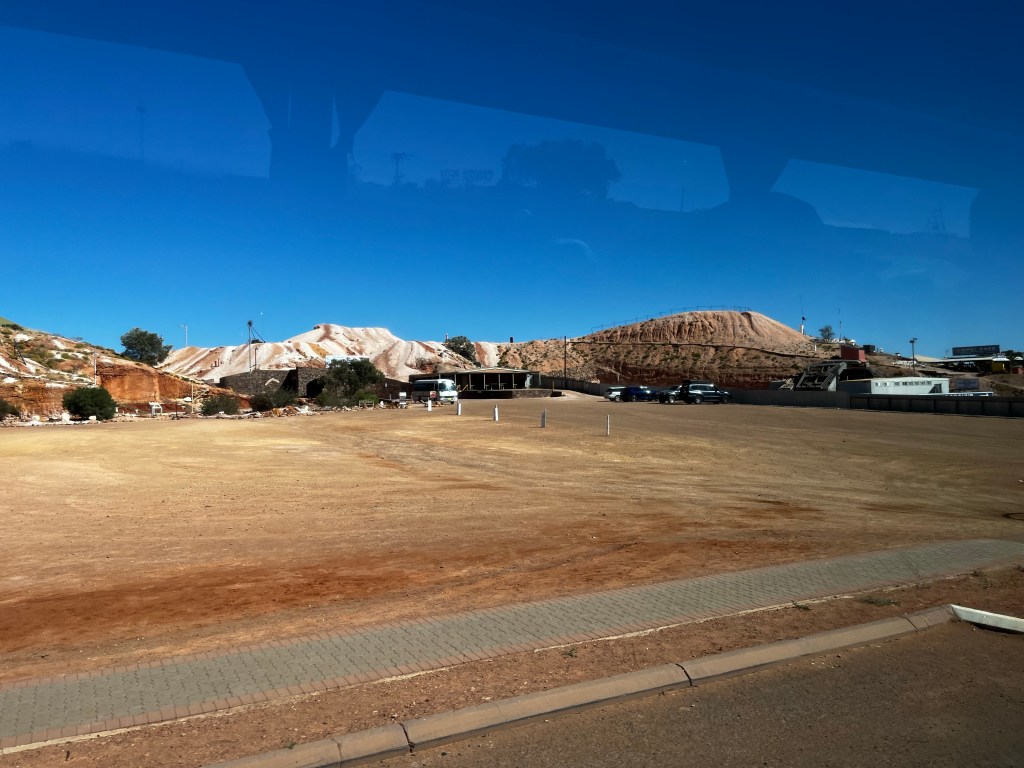
The museum was located entirely below ground and on the way down featured panels detailing the history of Coober Pedy. The name of Coober Pedy itself comes from a local aboriginal term, “kupa-piti” meaning “whitemans’ hole”. Indeed, the landscape around the town supports this image.
Opals were first discovered in the area in 1915, after which the town was established. These days, opal mining isn’t exactly lucrative, and the average age of miners in the area is 55, reflecting the fact that it’s much easier for younger people to work in more productive mines elsewhere in Australia. They can also earn much more money, as the average income in the area is about $40,000, not much more than the Australian minimum wage given a full 40 hour week.
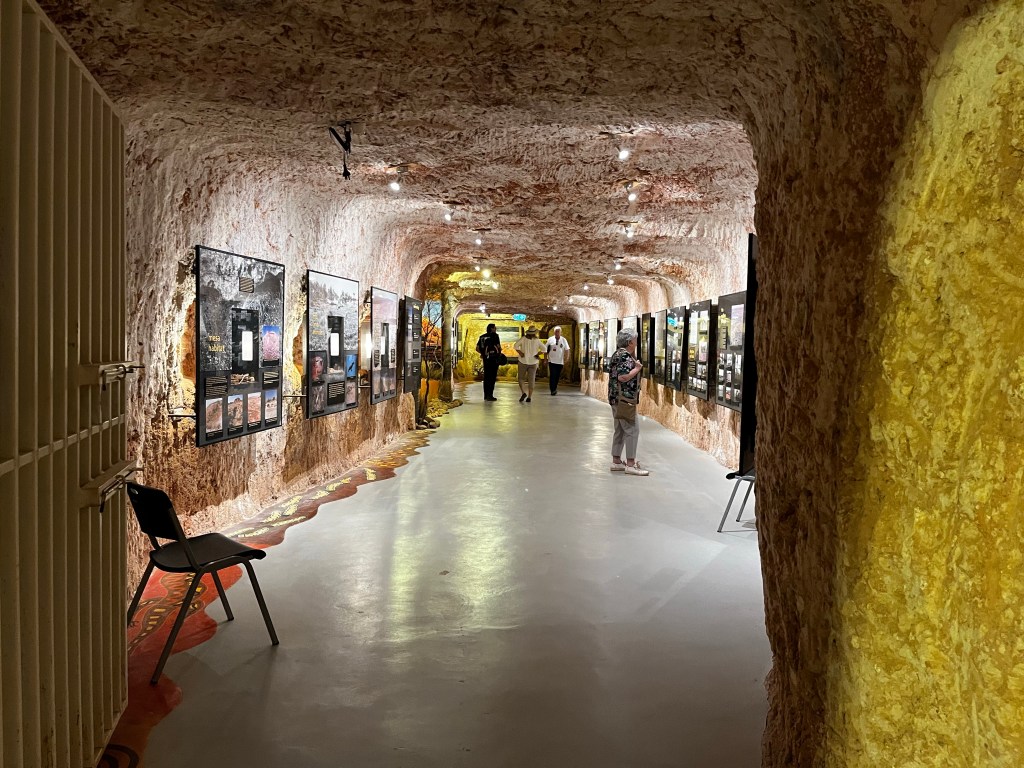
Our first stop in the museum was to see an early 1920s-style dugout.
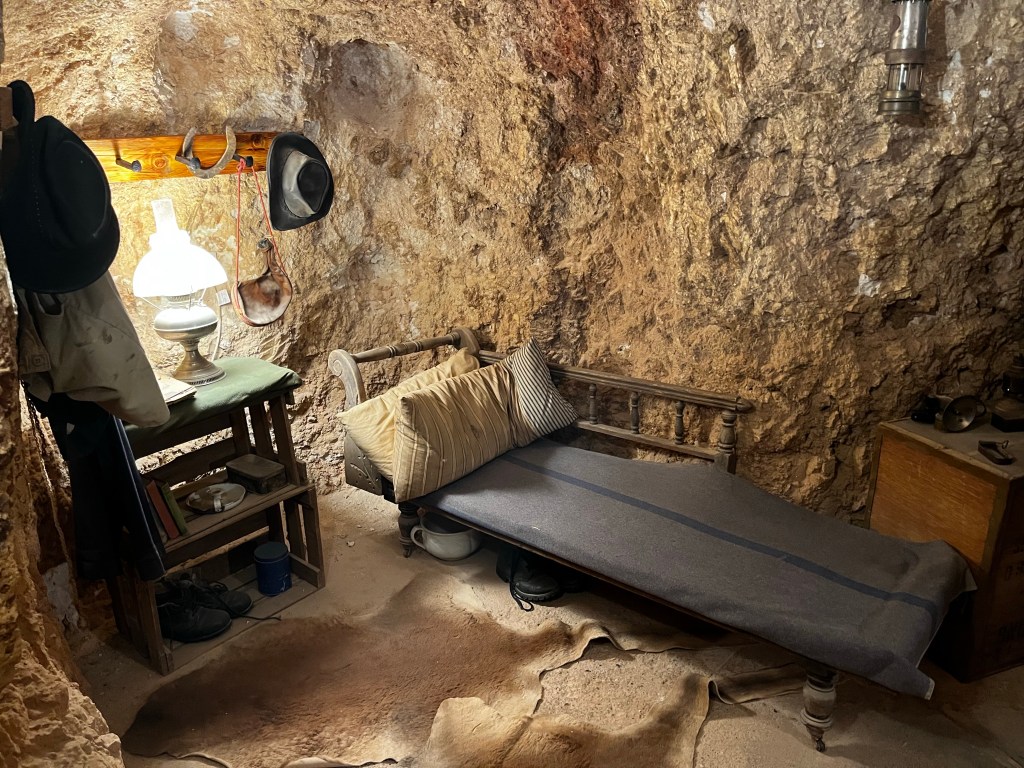
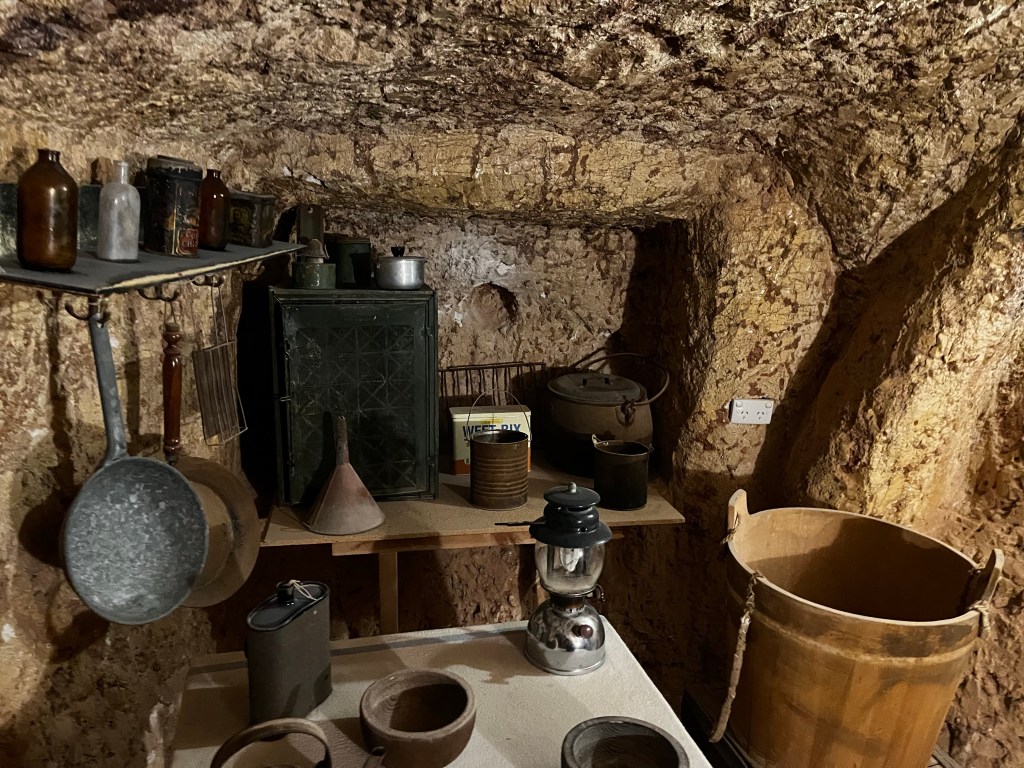
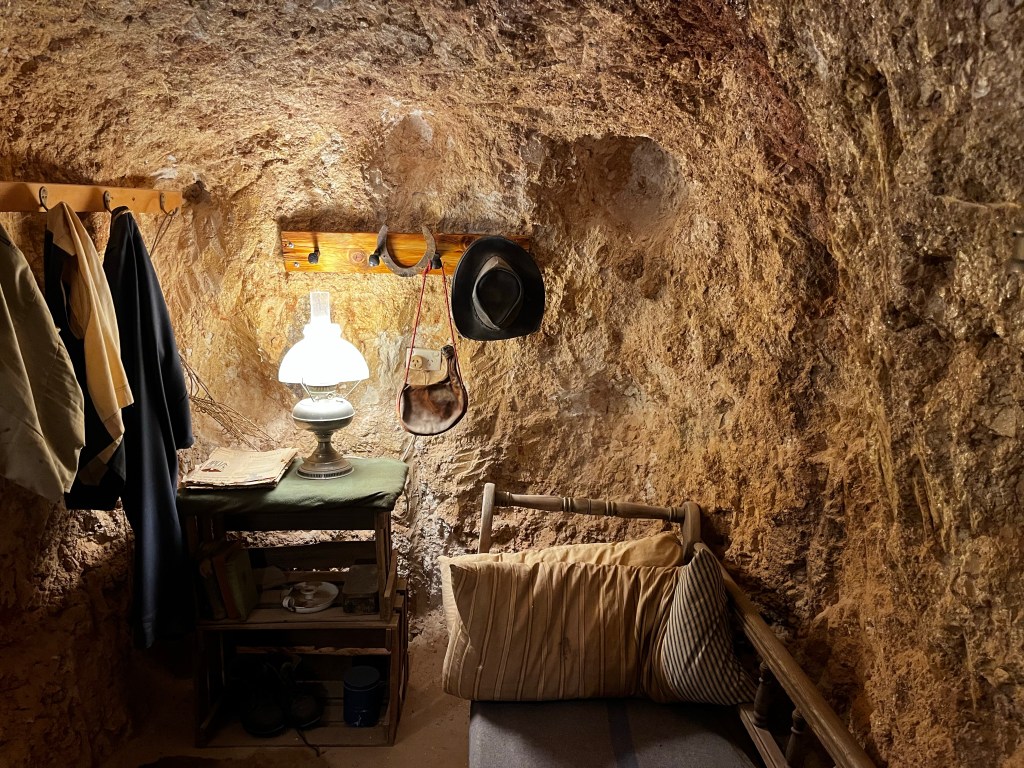
Early dugouts we’re constructed entirely by hand, and were built to suit whoever would be living there. A short person wouldn’t need to dig out as much space as someone taller, since they could just have a lower ceiling.
We then went in to check out a more modern dugout. This one had actually been lived in at one point before being added to the museum. It was dug out using modern mining equipment, so it’s much more squared off.
In the bedroom, dressers are made flush with the wall so there’s no possibility of tripping over it at night, given it’s pitch black inside. There’s also no need for nightstands, as they can just be carved out of the wall!
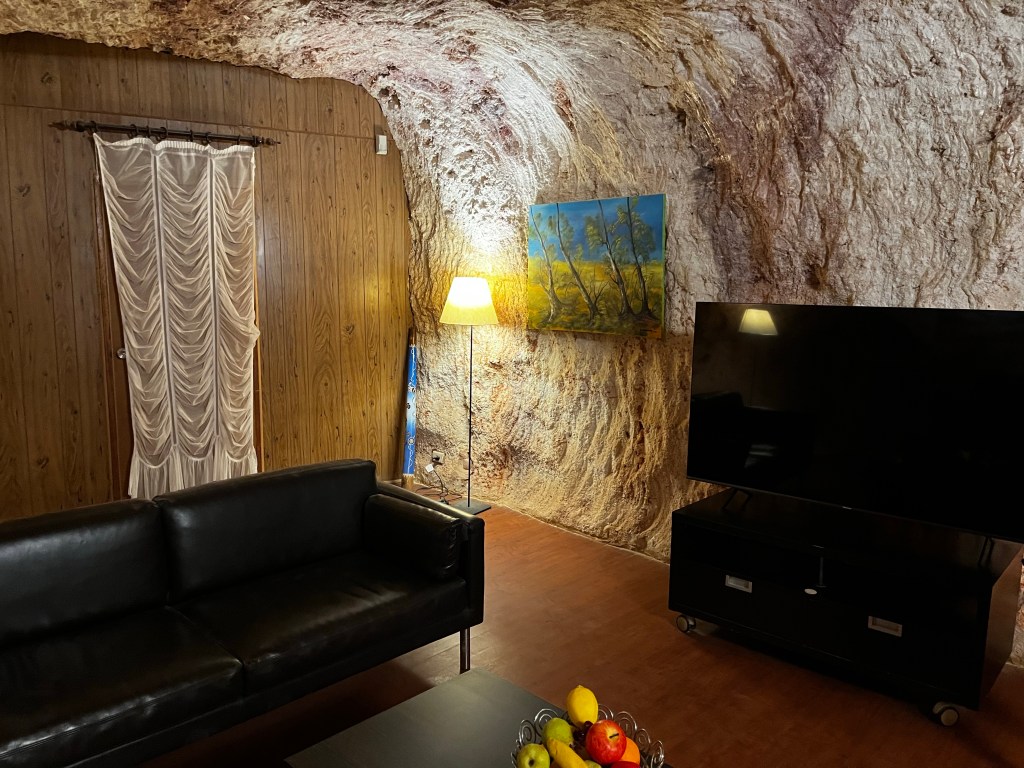
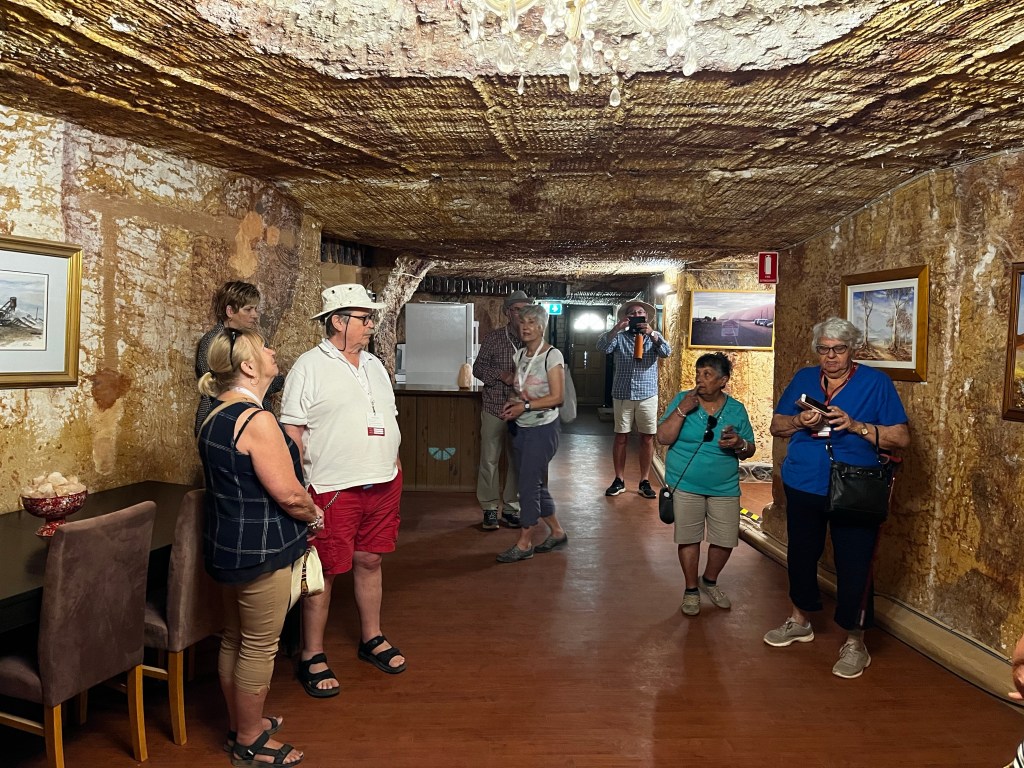
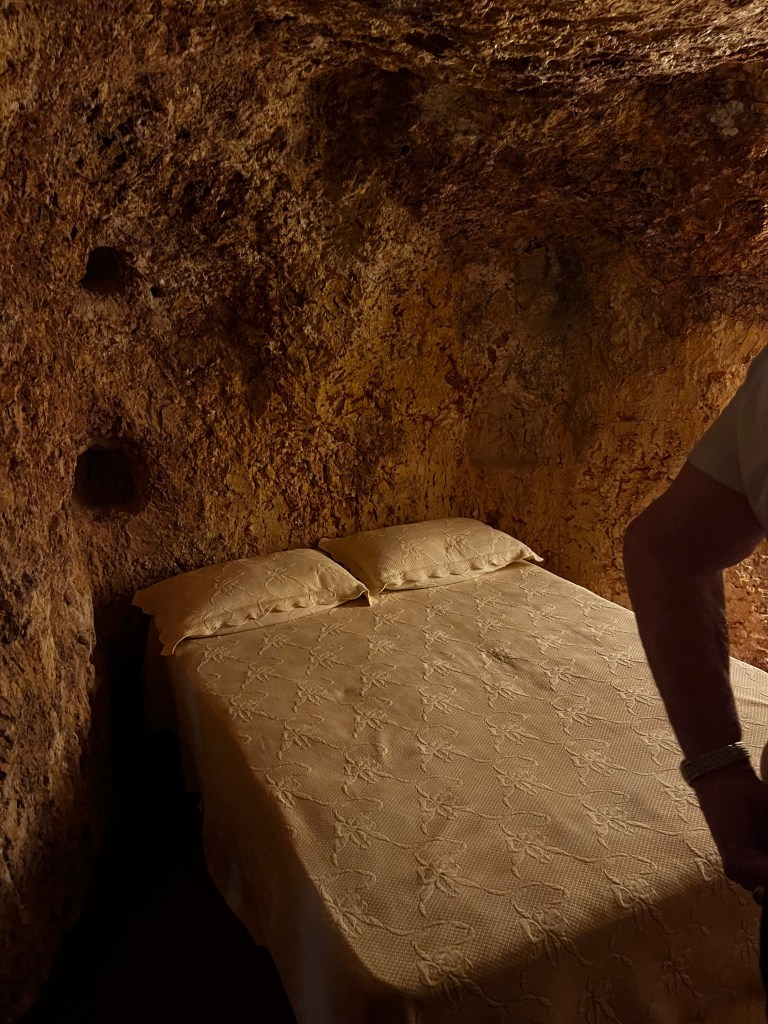
Our guide explained that real estate prices are quite cheap in Coober Pedy. I’d highly recommend checking out some listings online to see what an actual lived-in dugout looks like. If you have the equipment yourself, you can just dig out additional rooms, subject to council approval of course.
Mining is illegal within the town limits, but “renovating” is not. People wishing to exploit the areas around their house can apply to build another bedroom and dig it out to see if there’s an untapped opal vein.
At the end of the tour, we made our way down into the mine. Some people opted to skip that part in favour of checking out the opal shop.
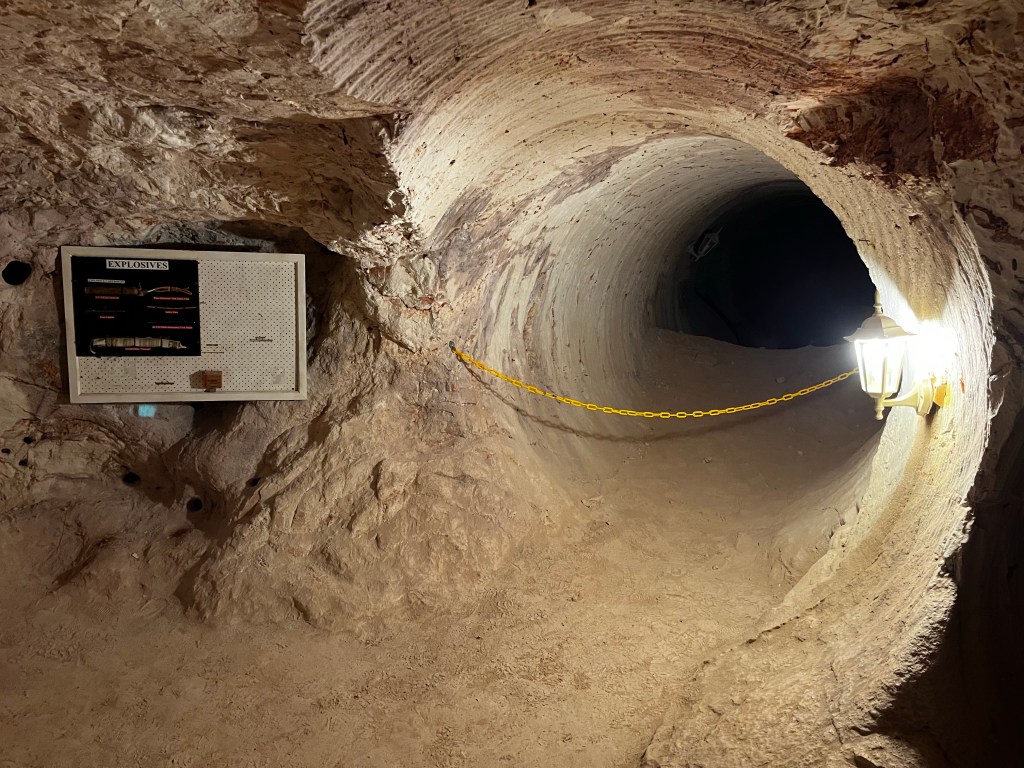
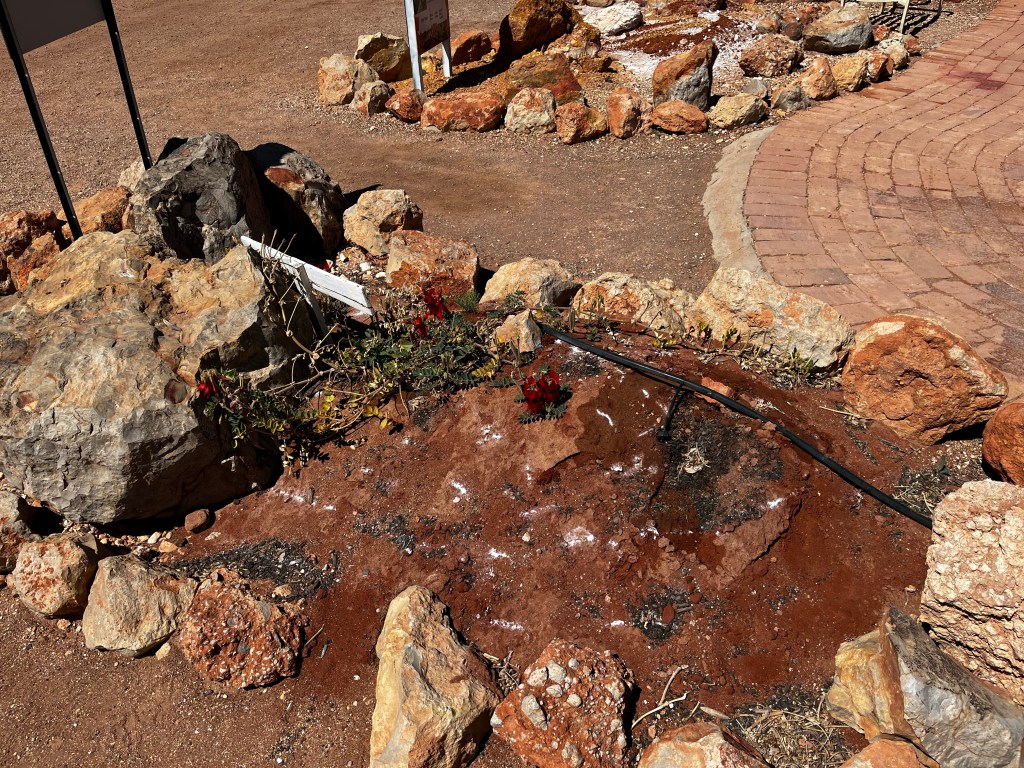
I had some free time before getting back on the bus so I wandered through the garden outside the museum. I found some Sturt’s desert peas, which is the state flower of South Australia. It’s a very pretty flower, and also illegal to remove, not that I was planning on taking any.
It was time for lunch, so we made our way out of town to an opal mine of course! Underground in the large dining area, our lunch of lamb, beef, roast potatoes and vegetables was waiting.
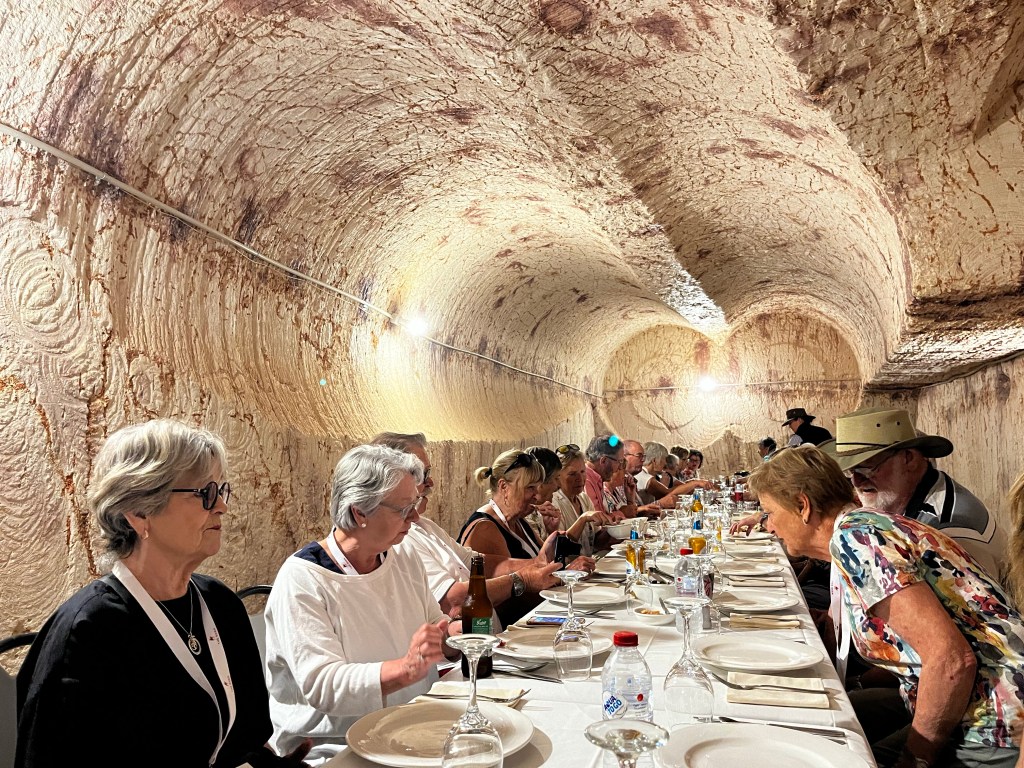
Normally I’m not one for lamb, but I figured I had to have some while I was here. As with all meals, the drinks were included and kept on flowing.
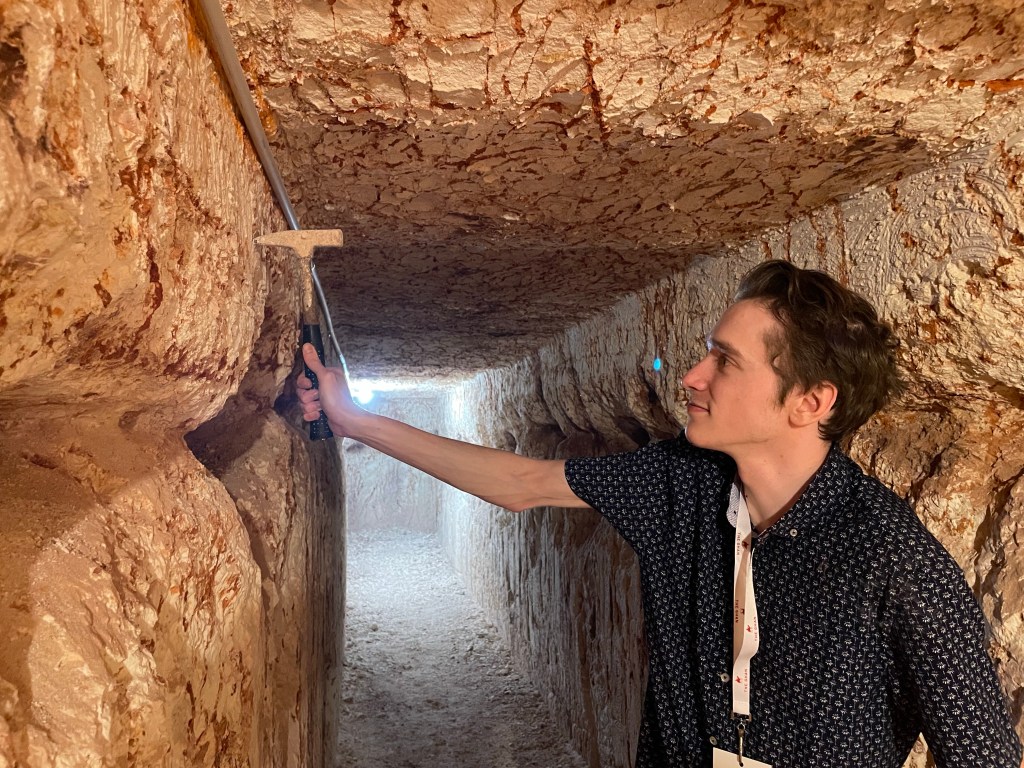
We had a chance to wander through the mine after lunch, and I even grabbed a pick myself to see if I could find anything of value. Alas, it looks like I won’t be quitting my job anytime soon.
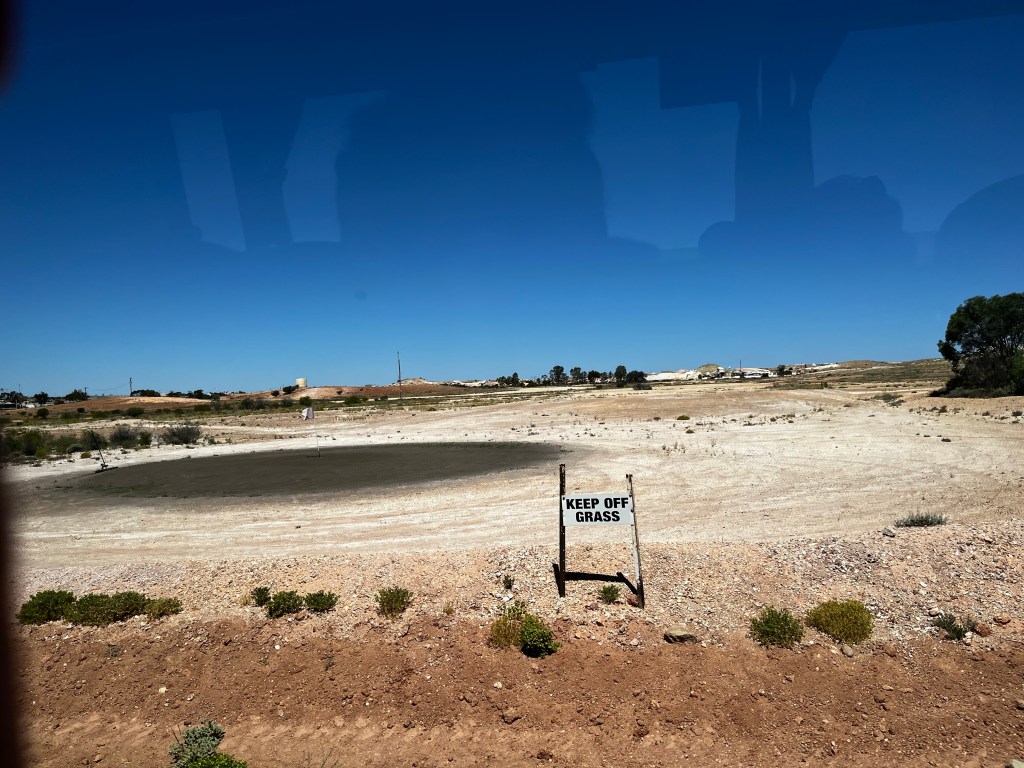
We drove back through town after lunch and made our way to the Coober Pedy Golf Club. It’s a very unique course completely devoid of grass, which I can get behind. Nobody was there while we were out, and most people play at night with glow in the dark balls.
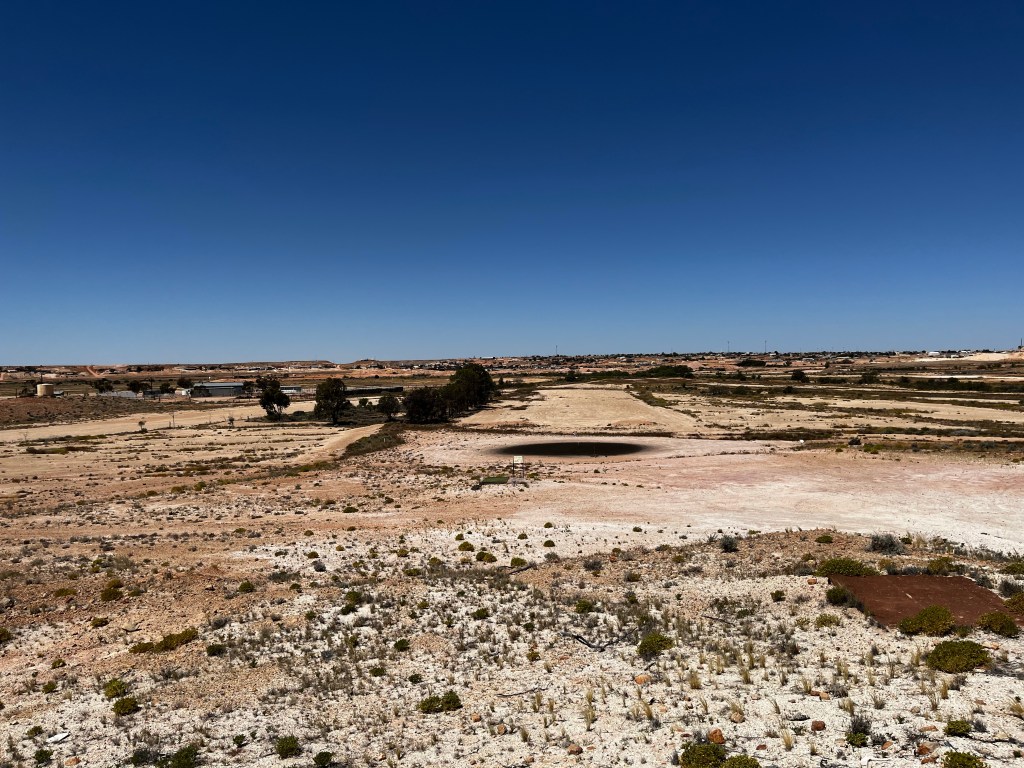
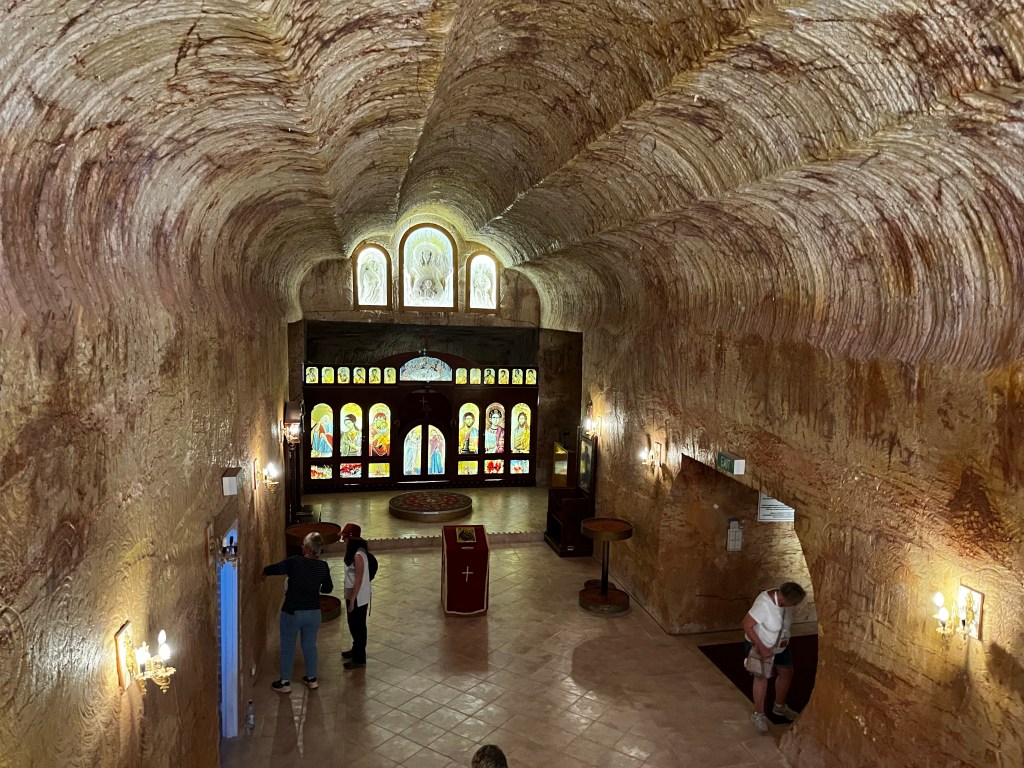
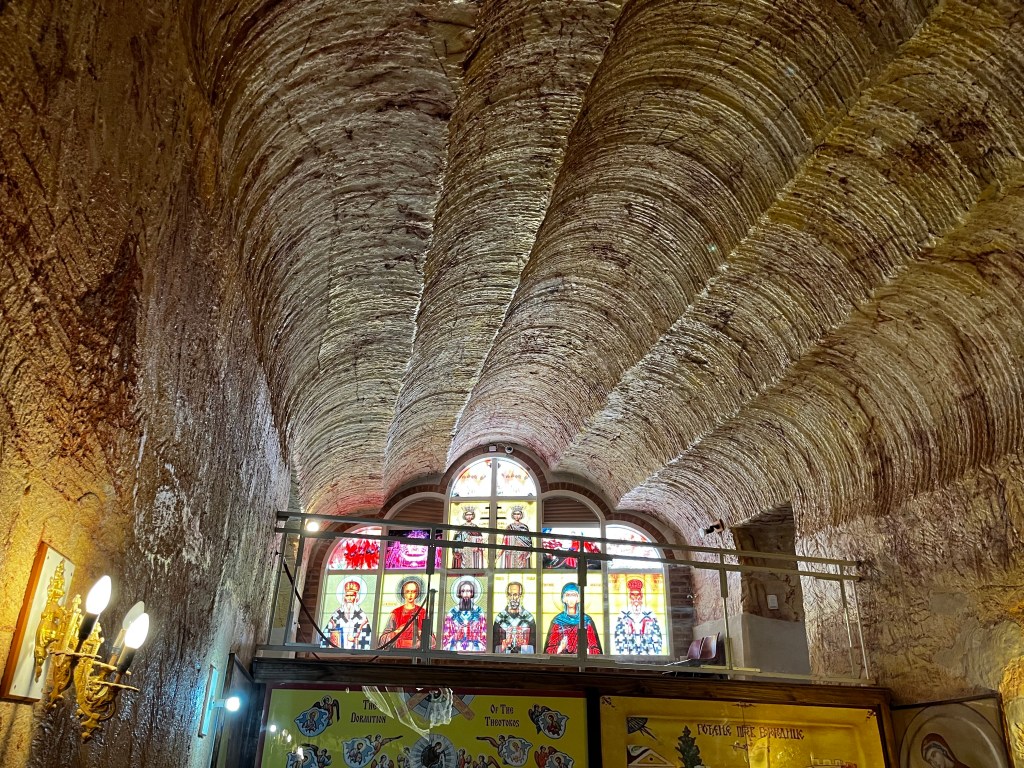
The next stop was the Serbian Orthodox Church. Opened in 1993, it is completely underground, and features quite an impressive interior. I’m not a religious person, but I do appreciate the art and architecture, especially this modern subterranean interpretation.

It was time to say goodbye to Coober Pedy as we made our way up to the Breakaways. I had quite enjoyed my short time there, although I certainly seemed to be in the minority. I’m not sure what other people were expecting, really. It’s quite a nice quirky outback town.
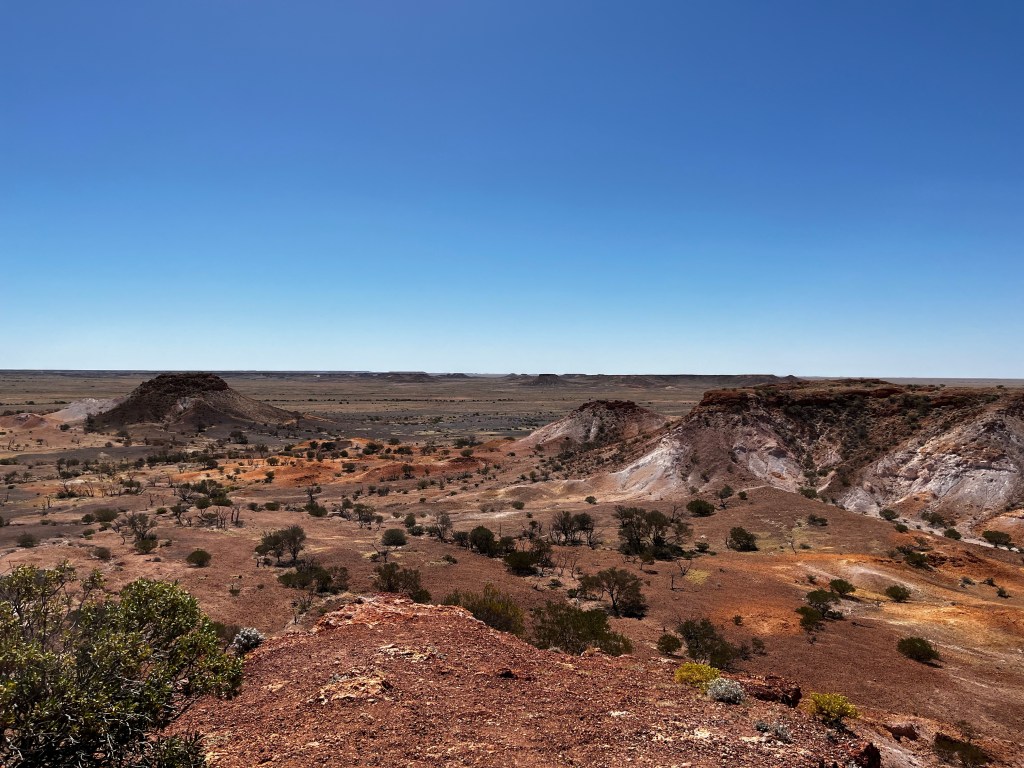
The Breakaways are a group of mesas about 30 km out of Coober Pedy. It’s quite an interesting landscape and not something I was expecting to see. Again, drinks were available to us as we enjoyed the scenic vista.
It was then time to make our way back to the train. Drinks and appetizers were waiting at picnic tables upon our arrival. I had met a young guy from the Blue Mountains on my tour so we chatted and decided to meet up the following afternoon in Adelaide.
The train horn sounded which was the signal to get back on. I made my way back to my room to get ready for dinner before heading to the lounge car.
I ended up spending dinner with the family from Sydney I ate with the first night. We had another lovely conversation, and they encouraged me to look them up if I’m ever back in Sydney. Maybe in a couple years when I ride the Indian Pacific!
I wasn’t quite tired so I stopped off at the lounge car and ended up closing it down with a couple of ladies that were also staying in my carriage. The singles car could get a bit rowdy and I think we might’ve woken some people up on our walk back.
It was a great day in Coober Pedy and another lovely time visiting with people on The Ghan. Unfortunately it was our final night aboard, and tomorrow we would be pulling into South Australia’s capital, Adelaide.
Today by the numbers
Steps taken: 6,097
Flights climbed: 19
Opals found: 0


 Quinn Kozlowski
Leave a comment