I got to sleep in a bit today as we were expected to be on the bus by 08:00. It was another jam packed day, and I was ready to see the sights.
The afirst stop was Ubirr, another Aboriginal art site in the northern part of Kakadu National Park. The main story here was of Mabuyu, which detailed what happens when you steal. This painting is thought to be around 2,000 years old.
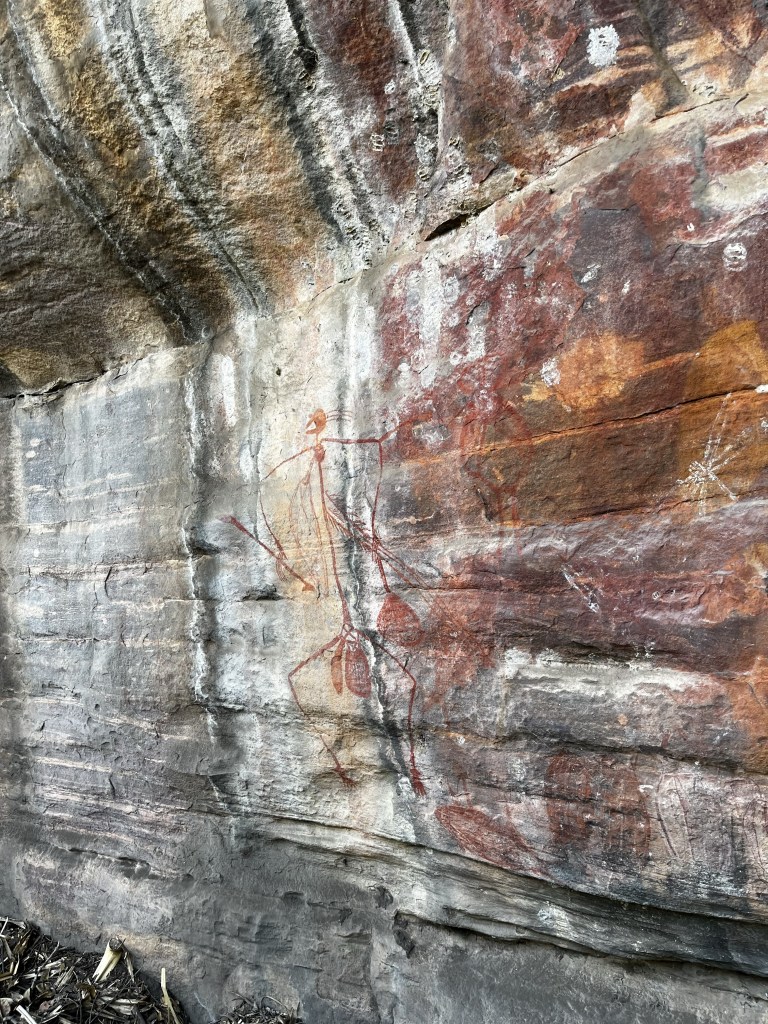
Further down the path was a painting of a thylacine, or Tasmanian Tiger. The now extinct animal used to only be found in Tasmania, but commonly lived throughout mainland Australia before the arrival of dingoes. Since dingoes came around 4,000 years ago, this painting is thought to be much older than that.
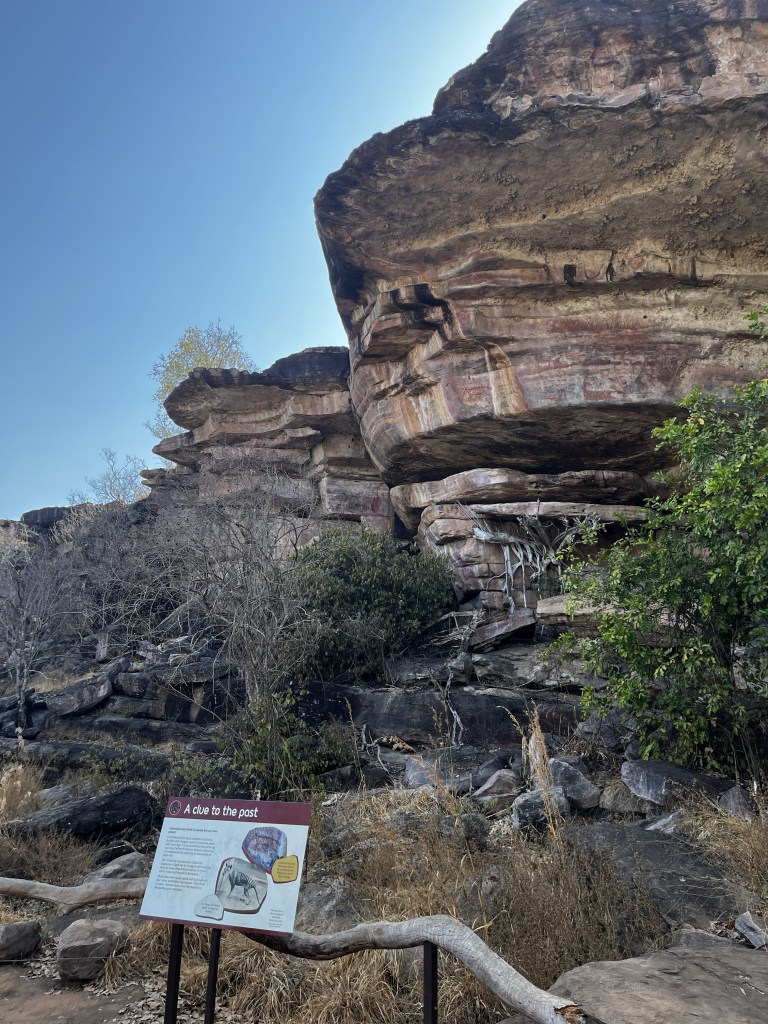
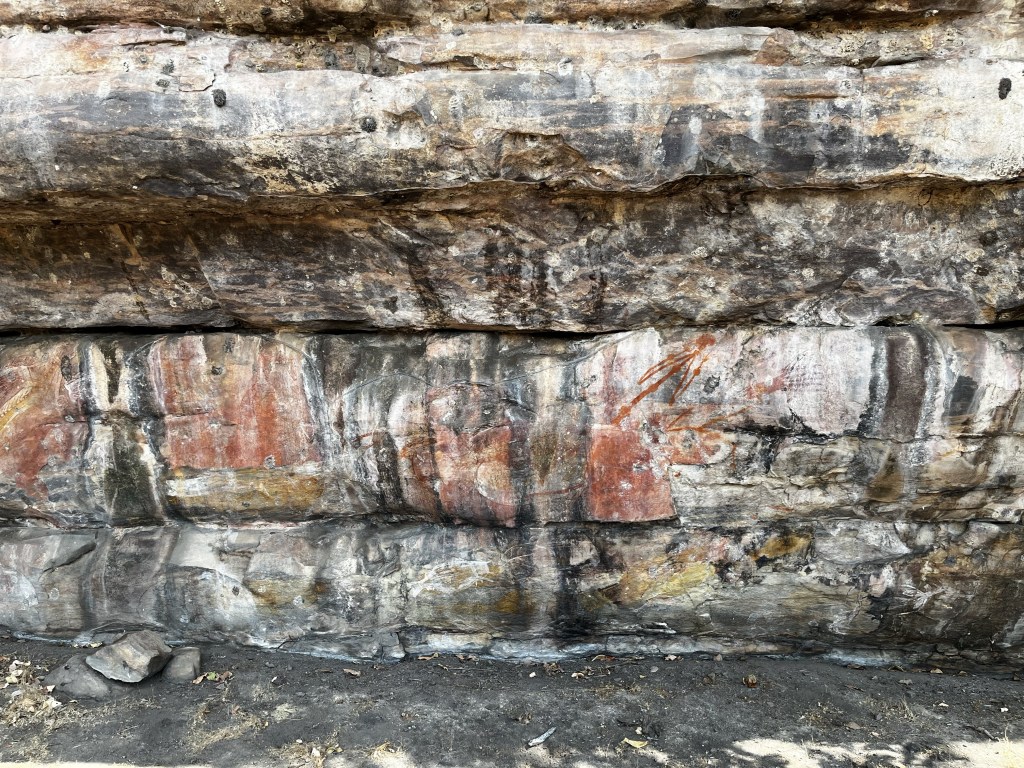
There was the option to head up to another lookout, but I decided to skip out on it. The uneven rocky ground is difficult for me to walk on, and I didn’t want to keep relying on others to help me out, even though people were quite happy to help. Instead I made my way along the rainbow serpent gallery and checked out some more art.
Next on the agenda was a trip to Cahills Crossing, an area where the road crosses over the East Alligator River into Arnhem Land. There’s no bridge here; instead you drive directly across the river! During the wet season, this entire area of the park is inaccessible as it is completely underwater, but during the dry season, this crossing provides an important link to the remote communities to the east.
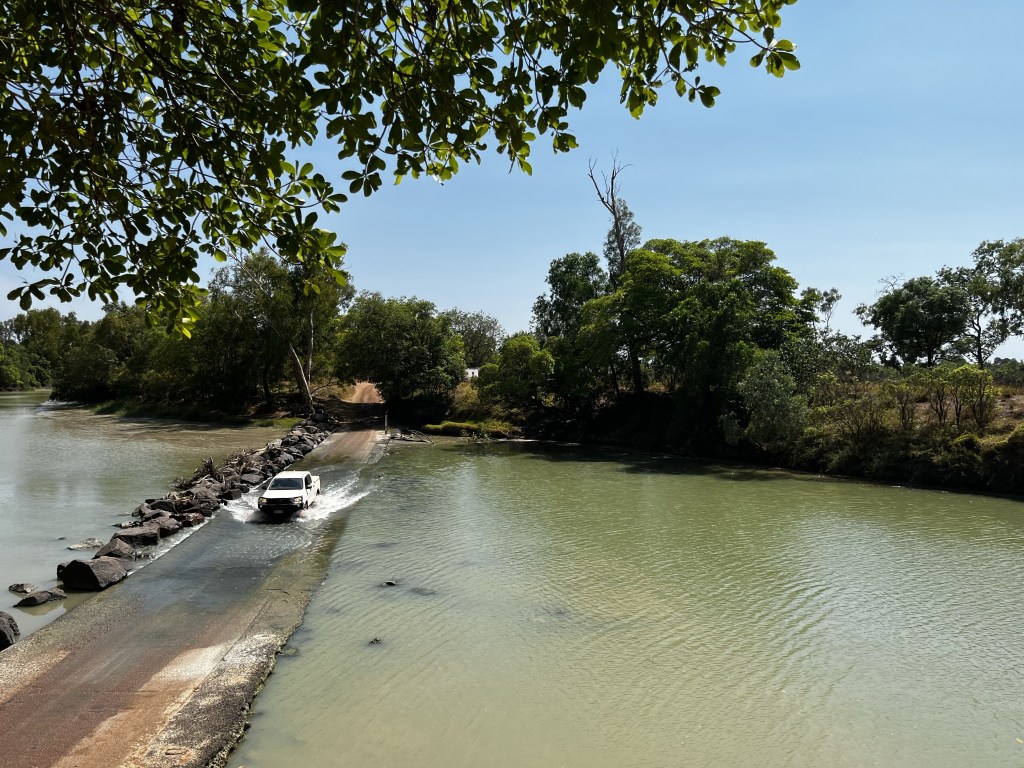
We saw a road train cross over the river, along with some smaller trucks. Lots of vehicles out here are equipped with snorkels; some for off-roading, but mainly to ensure access through partly flooded areas. It was also a good spot to check out some crocs, and we even saw a barramundi jump out of the water.
Our next stop was the Guluyambi cultural cruise. Our driver, Roman, took us along the river, often just floating along, and told us about the crocodiles. Called ginga in the local language, they are respected by the local population, who desires to mainly leave them alone.
During the day, the crocodiles were lined up along the muddy banks of the river, resting. They’re more active at night when the weather is cooler and when their food comes down to the river to drink. Saltwater crocodiles are a danger to humans, but only when in the water; they wouldn’t actively seek us out.
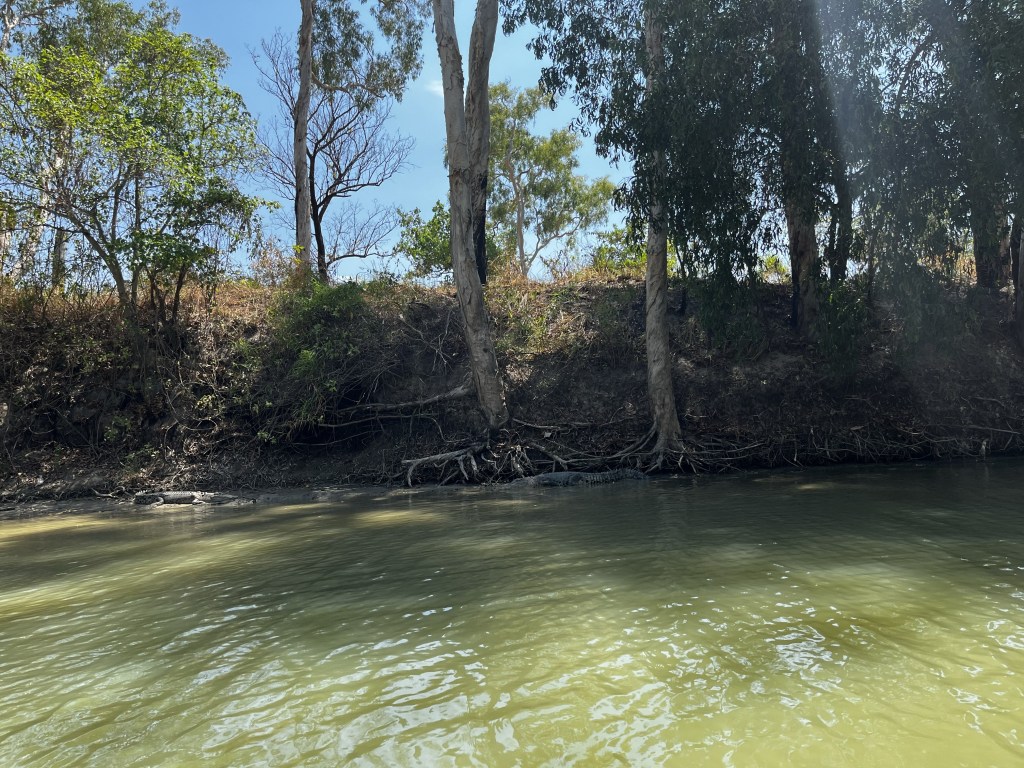
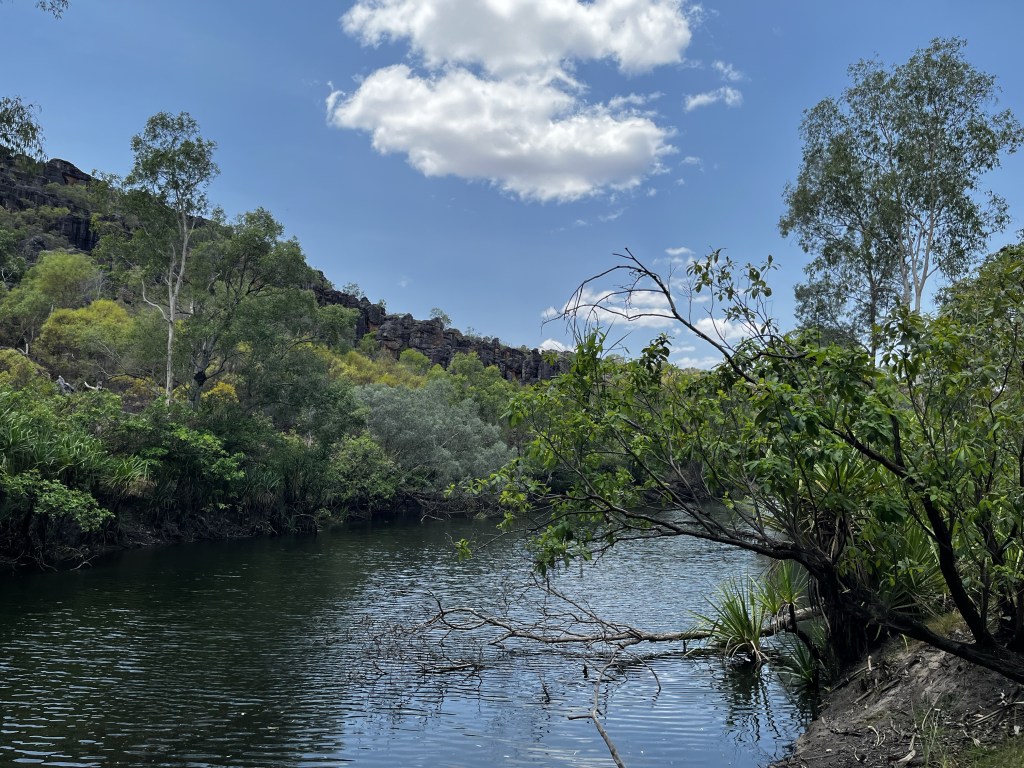
Towards the end of the tour, we went ashore onto Arnhem Land and checked out a freshwater spring. There were fantastic views of the landscape, and some of the more adventurous people climbed up to the top of a rock for a panorama.
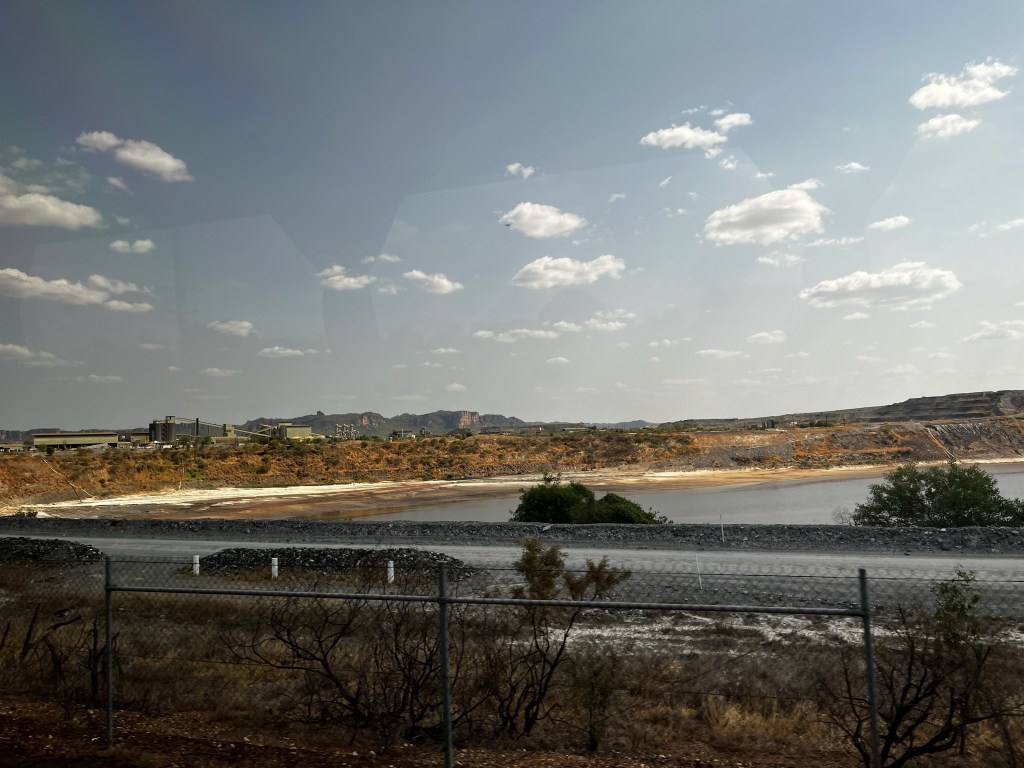
We then headed back into Jabiru for lunch at the Croc hotel. After lunch, we went for a drive around town. Most of the buildings and businesses in Jabiru are owned by Energy Resources Australia, who is also the owner of the Ranger Uranium Mine.
The Ranger Uranium Mine is currently being decommissioned, and there was some question as to whether the town would also be included as part of the plans. Jabiru was originally set up to serve the mine and provide housing for the workers, but with the introduction of the national park, it has also become a servicing station for the greater region.
Anthony mentioned that the number of days with a high less than 30 could be counted on one hand. It’s certainly not a place I’d want to live, with the constant heat, along with the humidity in the wet season. It was quite interesting to see the school, pool, and oval that serves the residents of the town.
Around 18:30 we pulled into Darwin just as the sun was setting. For some reason I had been booked in a different hotel from before, so the driver wasn’t aware and had to bring me back around.
I had quite enjoyed my time in Kakadu, but I was very much looking forward to my adventure on The Ghan the following day.
Today by the numbers
Steps taken: 6,142
Daily high: 38
Crocodiles seen: 50+
 Quinn Kozlowski
Leave a comment